



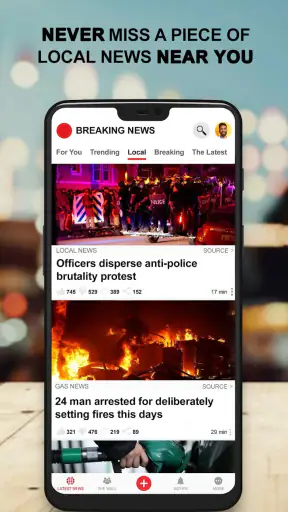


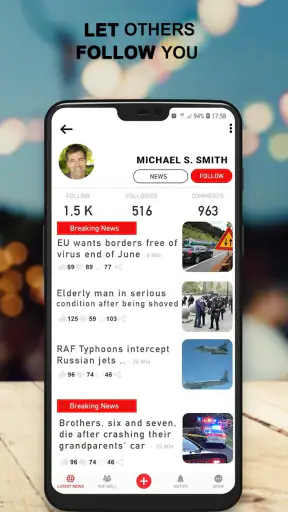
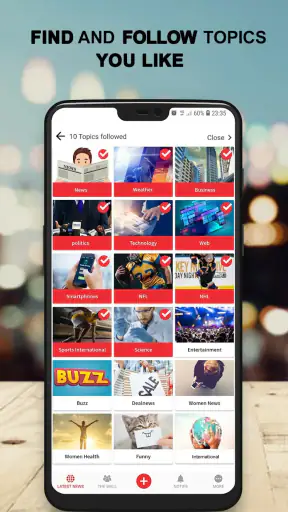

I installed US Breaking News: Local & News expecting a quick way to keep an eye on nearby events, and it ended up fitting a very specific role in my daily routine. This free news app from Safe Apps Inc is built around speed and convenience rather than long-form reading. Its focus is local and national US breaking news, so I found it most useful when I wanted a fast sense of what was happening without opening several separate news sites.
That focus matters in a household. On a shared tablet or a phone passed between family members, a short news check can be useful for deciding whether a commute may be affected, whether a local event has changed, or whether a developing story deserves a closer look. I would not treat it as the only source for important decisions, but I can see why an app with more than 10 million installs and an average rating of 4.5 has broad appeal. It gives casual readers a simple entry point into US breaking news without asking them to build a complicated reading system.
How it works in everyday household use
My clearest use case was the morning handoff between family members. One person might check the phone while preparing breakfast, then mention a local traffic problem or a major national story to everyone else. Later, another household member could open the app independently and scan the same general news environment. That makes it handy on a shared device, especially when people want awareness rather than a deep discussion of every article.
The app also works well for those small moments when a full newspaper app feels excessive. I might have a minute before leaving home, during a break, or while waiting for an appointment. Instead of committing to a long reading session, I can look for the newest headlines and decide whether anything deserves more time. The experience is closer to a quick news dashboard than a personal research library.
That convenience comes with a trade-off. Breaking news is often incomplete at first, and a fast headline can lack the background needed to understand what is really happening. I found myself wanting to open the underlying story or consult a more detailed source before drawing conclusions. For that reason, I see this app as a first pass: useful for noticing a story, less suitable as the final word on a complicated event.
It is also worth separating local usefulness from national usefulness. Local coverage can be valuable when I need immediate awareness of something close to home, while national headlines provide broader context. The balance will depend on where I live and what is happening at the time. Someone looking for specialist reporting, international news, business analysis, or a carefully edited daily briefing may feel that the app is too narrow.
Setting expectations before sharing a device
Because this is a news app rather than a family organizer, I would establish simple household boundaries before placing it on a shared tablet. I would explain that each person can read what interests them, but a headline is not automatically a confirmed conclusion. That conversation is especially useful when several people use the same screen and may assume that every visible item has been selected for their particular needs.
I would also encourage each person to pause before forwarding a dramatic story. The speed that makes the app convenient can make rushed sharing tempting. A practical household rule is to read beyond the headline, check the article context, and compare major claims with a trusted source when the subject affects health, safety, money, or travel. This is not a criticism unique to the app; it is simply the responsibility that comes with consuming fast-moving news.
There is another boundary that matters on shared devices: personal reading habits. A family member may want local alerts and sports-related coverage, while another may prefer national politics or general events. Since a shared device does not automatically represent one person’s interests, I would avoid treating the app’s visible news as a complete picture of what everyone in the household wants to follow. Separate devices or separate reading routines may be more comfortable for people who value privacy or a highly personal news feed.
I would not assume that installing the app creates a coordinated family account. The useful coordination I experienced came from people talking to one another, not from any family-management system. If your household needs formal profiles, parental controls, shared reading lists, or carefully separated accounts, you should choose a service designed around those functions instead of expecting this news reader to provide them.
Using it to coordinate the day
The strongest household benefit is simple coordination. A local headline can become a prompt to check a route, confirm an appointment, or leave extra time for a journey. I found that the app was most helpful when it started a conversation rather than ended one. One person notices a developing story, another verifies the details, and the household decides what action, if any, makes sense.
For example, imagine a parent checking the app before taking children to an activity. A local breaking-news item may suggest that conditions have changed, but the parent still needs to confirm the practical details through an official source. The app saves time by bringing the subject to attention early. It does not replace the final check that a responsible adult should make before changing plans.
This workflow is also useful for roommates or relatives who share responsibilities. One person may monitor the local situation in the morning, while another checks later in the day. The app can support that informal relay because it is quick to open and easy to understand. Still, I would not rely on it as a guaranteed notification channel for emergencies or as a substitute for official instructions. Fast news awareness and authoritative emergency communication are different jobs.
For a more organized routine, I would pair the app with a small household habit: when someone finds a relevant story, they should mention the location, the time they saw it, and whether they have checked a primary source. That prevents a vague headline from turning into confusion. It also helps children and teenagers learn that news is something to evaluate, not merely repeat.
Age context, trust, and reading habits
The listed content rating is Everyone, which makes the app broadly approachable in an age context. That does not mean every breaking-news subject will feel comfortable for every child. Real-world news can include upsetting events, alarming language, or stories that require adult explanation. I would be comfortable introducing it to a family only with age-appropriate supervision and conversation, especially for younger readers.
For teenagers, the app can be a useful starting point for learning how current events develop. I would ask them to compare an initial headline with later reporting and notice how details change as more information becomes available. That is a more valuable lesson than simply asking them to consume more news. The app’s speed creates a natural opportunity to discuss uncertainty, corrections, source quality, and the difference between a report and an opinion.
Trust should be handled in the same practical way. I appreciate the app as a discovery tool, but I would not give it automatic authority just because a story appears prominently. When a claim matters, I look for confirmation from an official agency, a direct statement, or established reporting with enough context to explain what is known. This extra step is particularly important when household members have different levels of media literacy.
Adults may also want to consider how much breaking news is healthy for the household. A constant stream can create unnecessary stress, particularly when people check it repeatedly without a clear reason. I found the app more useful when I opened it at sensible points in the day rather than treating every headline as urgent. That rhythm keeps it informative without allowing the news cycle to dominate the home.
What the current app details mean in practice
US Breaking News: Local & News is listed as free, so trying it does not require a purchase decision. It belongs to the News & Magazines category and runs on Android starting with version 6.0 or later. The current version is 13.0.2, which indicates that the app has continued through multiple iterations since its release on July 22, 2017. I mention those details because compatibility matters on older household phones and tablets.
The developer is Safe Apps Inc, and the app has around 105 thousand ratings alongside roughly 8 thousand written reviews. Those figures suggest substantial public use, but they should not replace your own judgment. A high average rating can tell me that many people find the basic experience useful; it cannot guarantee that the local coverage, presentation, or reading pace will suit every family.
On an older device, the minimum operating-system requirement is worth checking before planning a shared installation. If the household uses a mixture of newer and older phones, the app may fit some devices more easily than others. I would test it on the device that people actually share rather than assuming that compatibility on one phone means the same experience everywhere.
The free price is another practical advantage for a household that wants a quick news option without adding a subscription to its monthly budget. At the same time, free access alone does not make it the best replacement for a paid newspaper or a public broadcaster’s detailed service. Those alternatives may be preferable when you care more about investigative reporting, editorial depth, archives, or a carefully structured daily edition than immediate headline scanning.
Where it beats familiar alternatives—and where it does not
Compared with opening several browser tabs, this app is more direct. I do not have to remember which local outlets to visit before I know whether anything is happening. Compared with a social-media feed, it feels like a more intentional place to begin because I am looking for news rather than being pulled through a mixed stream of posts, opinions, and unrelated recommendations.
Its advantage over a traditional newspaper app is speed and simplicity. A newspaper-style service is often better when I want a finished package with analysis and a clear editorial structure. This app is better when I want to notice developing stories quickly and decide what to investigate next. The choice is not really between “good” and “bad” news; it is between a rapid starting point and a more complete reading experience.
It is less convincing as a replacement for official local channels. If I need verified information about a closure, public safety instruction, school decision, or government service, I would go directly to the responsible organization after using the app to learn that the issue exists. That two-step workflow is slightly slower, but it is much safer than treating a breaking-news summary as an instruction.
I would also skip it if your priority is a highly customized reading environment with extensive controls over sources, topics, or household profiles. The app’s appeal is its accessible, fast-moving news focus. Readers who want to tune every part of their information diet may be happier with a dedicated news aggregator or individual publications, even if that requires more setup.
Small habits that make the app more useful
My first practical tip is to use the app as a triage layer. Scan quickly, identify the one or two stories that could affect your day, and then move to a more authoritative or detailed source. This avoids spending time on every headline while still capturing the app’s main strength: helping me notice what deserves attention.
My second tip is to add a location check to household conversations. “There is a breaking story” is too vague to act on. Ask where it happened, when the report was published, and whether it affects your area. This simple habit prevents national news from being mistaken for a local event and keeps local news from being exaggerated through repetition.
My third tip is to separate awareness from action. A headline can justify checking a route or contacting someone, but it should not automatically justify cancelling plans, making a purchase, or sharing a warning. I found the app most reliable when I treated it as an early signal and reserved decisions for information confirmed elsewhere.
A fourth useful approach is to make the shared device a discussion point rather than a silent news screen. If a younger reader sees a difficult story, an adult can explain the difference between what is known, what is being investigated, and what remains unclear. That turns a quick news tool into a modest media-literacy exercise without pretending that the app itself provides educational supervision.
My household verdict
After using it, I would recommend US Breaking News: Local & News to people who want a fast, free way to notice local and national US stories. It is particularly practical for a household that shares a device informally and needs a quick starting point for daily coordination. Its broad Everyone rating, free access, and support for Android 6.0 and later make it approachable for many users, while its established audience suggests that the basic idea has found a lasting place in the category.
I would recommend it with one clear condition: do not confuse speed with completeness. The app can help you spot a developing story, but important decisions still deserve confirmation and context. Families should also create their own boundaries around shared reading, privacy, sensitive subjects, and the amount of breaking news that feels healthy.
For my needs, it works best beside—not instead of—official local sources and deeper news providers. If your goal is quick awareness before work, school, travel, or a shared household decision, I can see the value immediately. If you want investigative depth, specialized reporting, formal family controls, or a carefully personalized news system, I would look elsewhere. My honest recommendation is to use it as a fast first look, then verify anything that truly matters.


